

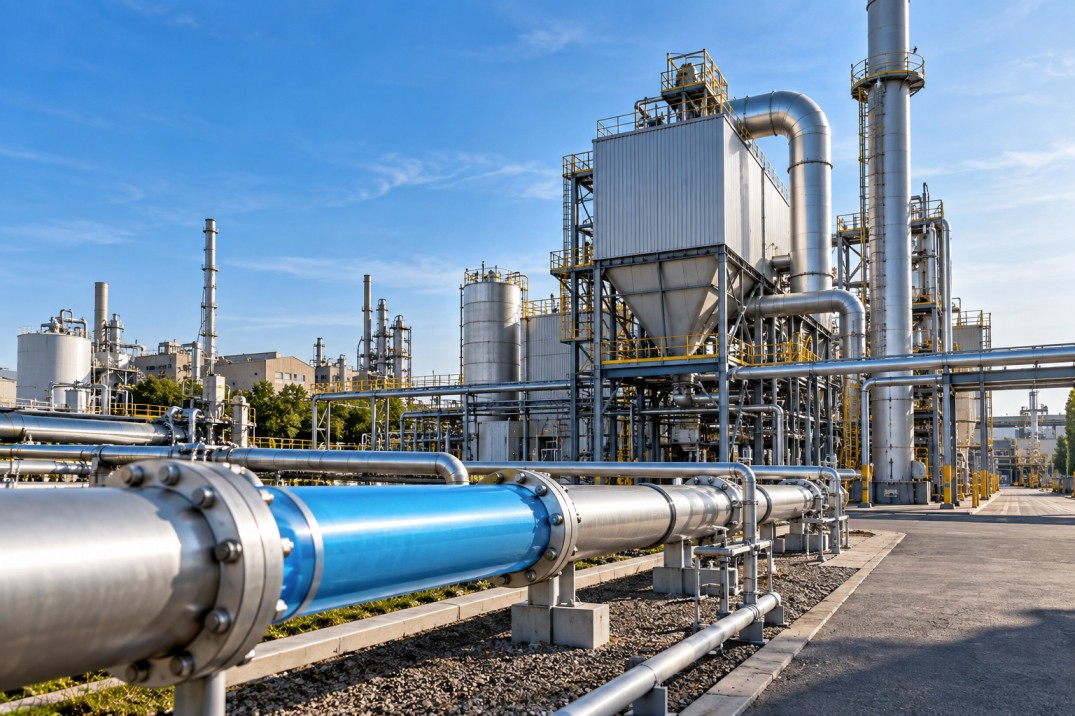
LANXESS is advancing the decarbonisation of its production operations at the Krefeld-Uerdingen site in Germany by replacing natural gas with hydrogen for drying iron oxide pigments. The company has commissioned a hydrogen burner for its spray dryer, making the facility one of the first large-scale industrial plants in Germany to use hydrogen as a fuel in continuous operation.
The transition is expected to reduce LANXESS’ carbon footprint by approximately 6,000 metric ton per year. The hydrogen is supplied by neighbouring Covestro and is generated as a byproduct of chlorine electrolysis at its Krefeld-Uerdingen plant. A dedicated pipeline transports the hydrogen directly to the LANXESS production facility.
“Switching from a natural gas burner to a hydrogen burner is a significant technological step towards low-greenhouse-gas processes,” says Michael Ertl, Head of the Inorganic Pigments business unit, LANXESS. “We are proving that decarbonizing industry works not only in pilot projects, but also in the day-to-day operation of large production facilities.”
LANXESS installed the hydrogen burner at the end of 2025 and has progressively brought the system into operation. The setup has been designed to run entirely on hydrogen and incorporates a dedicated hydrogen supply line, an adapted burner, upgraded measurement and control technology, and additional safety systems.
Integrated Infrastructure Supports Hydrogen Transition
The companies’ shared infrastructure at the Krefeld-Uerdingen Verbund site has played an important role in enabling the project. The short pipeline distance, existing infrastructure and established safety concepts provide LANXESS with a reliable hydrogen supply while supporting the integration of the new fuel system into its production operations.
“The project shows that industrial partners at a Verbund site can particularly successfully shape the transition to climate-friendly production,” says Rob Eek, Production Manager at Covestro in Krefeld-Uerdingen.
LANXESS and Covestro have maintained a long-standing production partnership at the site. Covestro supplies nitrobenzene to LANXESS for the manufacture of iron oxide pigments. Aniline generated as a byproduct of this process is subsequently returned to Covestro, where it serves as an important raw material for plastics production.
The introduction of hydrogen fuel into LANXESS’ spray-drying process adds another element to this integrated production model, demonstrating how existing industrial infrastructure and cross-company material flows can support efforts to reduce greenhouse-gas emissions.