

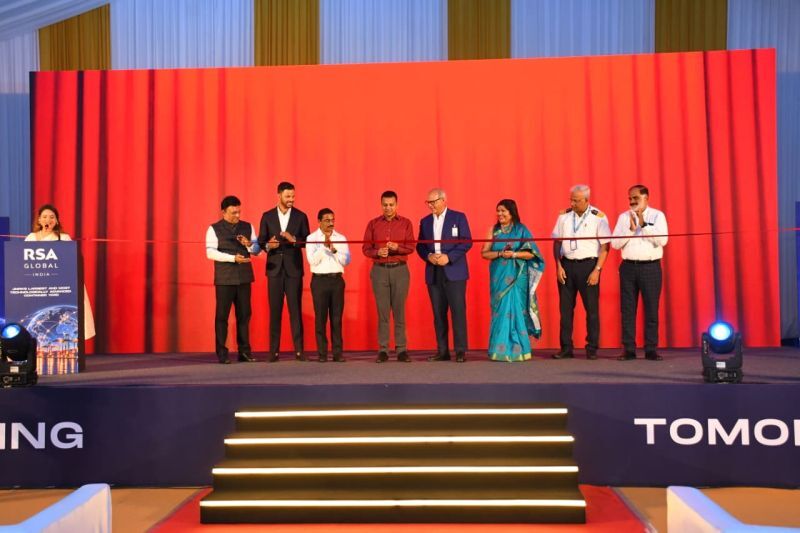
The Jawaharlal Nehru Port Authority (JNPA), in partnership with RSA Global, has inaugurated Phase 1 of a 25-hectare automated Empty Container Yard at Nhava Sheva, Maharashtra. Developed by RSA Global under the Ease of Doing Business (EoDB) initiative, the facility is designed to improve empty container management and strengthen the logistics infrastructure supporting port operations.
The new yard introduces a technology-driven approach to container storage, tracking and movement. Its digital infrastructure includes real-time inventory visibility, Optical Character Recognition (OCR)-enabled automated gate operations, QR and Radio Frequency Identification (RFID)-based container tracking, and dedicated inspection facilities. These systems are intended to improve monitoring, minimise manual intervention and enable more transparent and coordinated operations within the yard.
The facility also incorporates dedicated truck parking areas and an integrated internal road network to facilitate smoother vehicle circulation. These provisions are expected to improve the movement of containers and transport vehicles, helping streamline daily logistics operations and reduce operational bottlenecks.
The development forms part of JNPA’s broader efforts to modernise port-linked infrastructure through digitalisation and operational improvements. By providing dedicated space for empty container storage and handling, the yard is expected to improve coordination among logistics stakeholders and support the growing requirements of containerised trade.
Planned as a phased development, the project will see further expansion of storage capacity, handling capabilities and automation in subsequent stages. This will help establish a larger, technology-enabled empty container management facility at Nhava Sheva.
The initiative reinforces JNPA’s focus on improving operational efficiency and strengthening the port-led supply chain. With enhanced tracking, better space utilisation and streamlined container movement, the facility is expected to support more predictable logistics operations for the export-import (EXIM) trade community.