

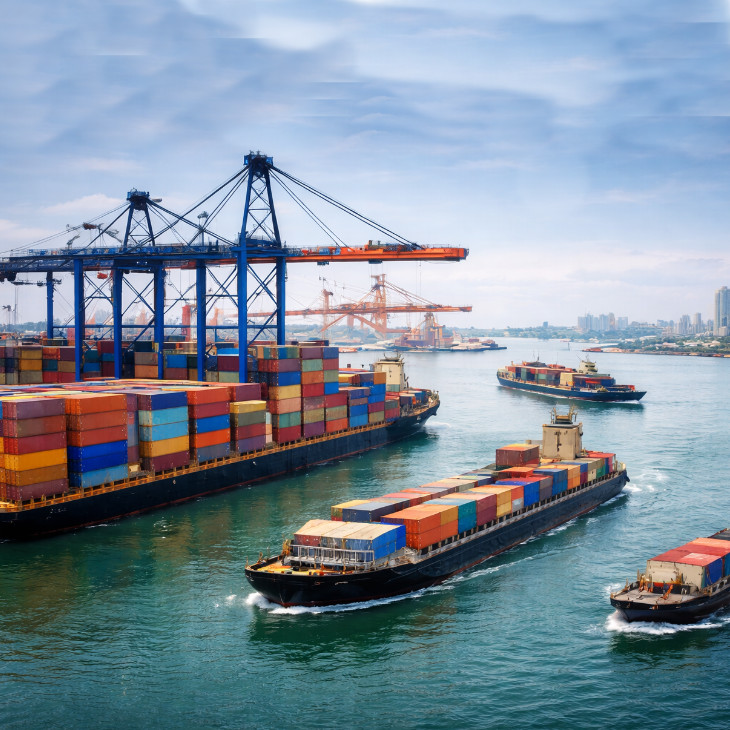
The Union Budget 2026–27 has laid out a comprehensive roadmap to enhance logistics efficiency and reduce freight transportation costs by strengthening multimodal connectivity across rail, waterways, ports and coastal shipping.
Key announcements include the development of new Dedicated Freight Corridors connecting Dankuni in the East to Surat in the West, aimed at improving long-haul freight movement across major industrial and consumption centres. The corridor is expected to ease congestion on existing rail networks while supporting faster and more cost-efficient cargo movement.
The Budget also proposed the operationalisation of 20 new National Waterways over the next five years, beginning with NW-5 in Odisha, which will link mineral-rich regions with ports such as Paradeep and Dhamra. To support inland water transport, a ship repair ecosystem catering to inland waterways will be developed at Varanasi and Patna, along with regional skill development centres to build specialised maritime manpower.
Further, the launch of a Coastal Cargo Promotion Scheme aims to increase the share of inland waterways and coastal shipping from 6 per cent to 12 per cent by 2047, encouraging a modal shift away from road and rail. The move is expected to lower logistics costs, reduce carbon emissions, and improve cargo evacuation efficiency from ports.
Commenting on the Budget’s logistics and maritime thrust, Rinkesh Roy, Joint Managing Director and CEO, JSW Infrastructure Ltd., said, “The thought through push towards port modernisation, inland waterways, coastal shipping, and logistics corridors will make India competitive and marks a structural change.”
He added that “the additional focus on expanding national waterways, strengthening east coast connectivity, container manufacturing, and digitalisation of ports aligns closely with our vision of building integrated, port-led logistics ecosystems,” noting that “creating seamless linkages between ports, evacuation infrastructure, and industrial clusters is a must to achieve the uninterrupted growth.”
Highlighting the sustainability dimension, Roy said, “the emphasis on green ports, sustainability-linked financing, ship repair, and smart-port technologies will enhance India’s maritime competitiveness while supporting long-term, sustainable growth.”
Together, the proposed freight corridors, expanded waterways network and coastal shipping incentives are expected to strengthen port-led industrial development, improve supply chain resilience, and support India’s ambition to emerge as a globally competitive logistics and maritime hub.