

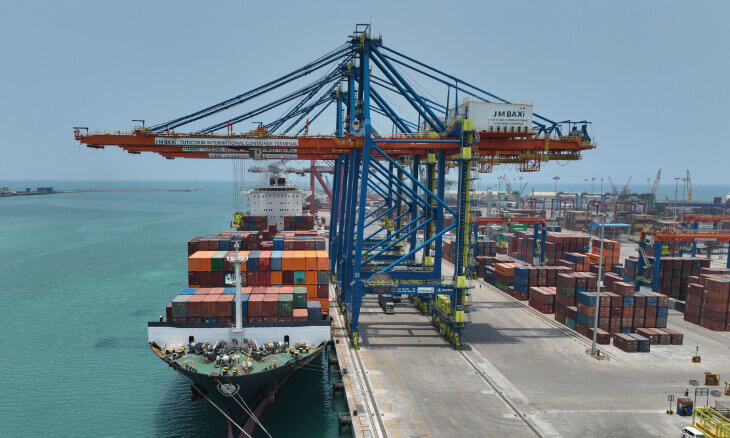
The Indian Railway Finance Corporation (IRFC) has entered into a memorandum of understanding to facilitate the development of the outer harbour at Tuticorin Port, signalling a structured push toward strengthening maritime infrastructure along India’s southern coastline. The agreement establishes a collaborative framework between the financial institution and port stakeholders to mobilise capital, streamline planning, and advance infrastructure execution.
Under the arrangement, the focus will be on expanding berth capacity and enabling the port to accommodate larger vessels. The proposed development includes dredging operations, construction of additional berths, augmentation of shore-based facilities, and the integration of multimodal connectivity to strengthen rail and road linkages. This integrated approach is intended to ensure seamless cargo movement and improved operational efficiency.
IRFC is expected to evaluate suitable funding mechanisms and design project finance models aligned with the phased nature of the harbour’s expansion. Financing structures will be tailored to match the long-term asset lifecycle, ensuring repayment schedules are structured sustainably. Parallelly, port authorities and associated stakeholders will undertake feasibility assessments and environmental studies to support detailed engineering design and procurement strategies, with efforts directed toward minimising disruption to ongoing port activities.
The execution roadmap outlines a staged implementation process, beginning with preparatory groundwork before moving into systematic construction and commissioning of new infrastructure. Close coordination is anticipated among central and state government agencies, port authorities, and private contractors to align technical expertise, financial resources, and project management capabilities. Key components of the implementation strategy will include regulatory clearances, risk-sharing frameworks, and contract structuring.
The outer harbour development is positioned to enhance cargo throughput, reduce vessel turnaround time, and strengthen export–import operations across southern trade corridors. Beyond operational gains, the project is expected to generate wider economic benefits by supporting ancillary industries and reinforcing supply chain resilience across the region. Through this structured financial and planning collaboration, the MoU lays the groundwork for translating strategic intent into tangible infrastructure outcomes.