

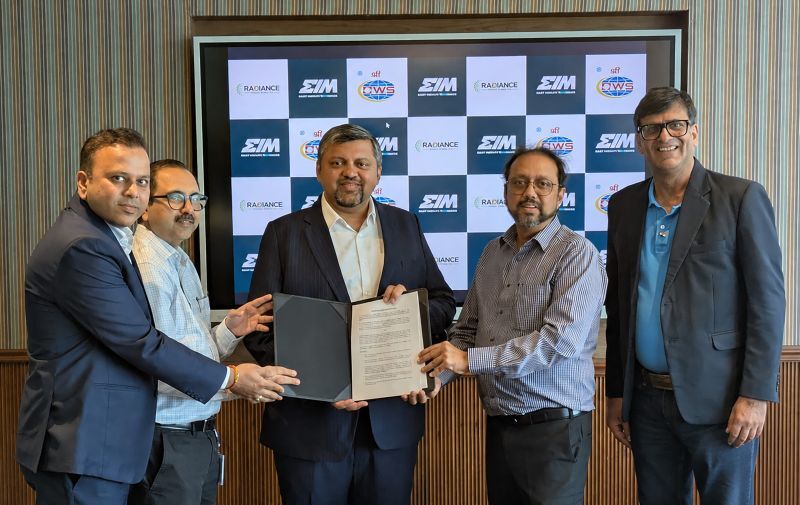
Energy In Motion (EIM) has entered into a strategic Memorandum of Understanding with Oil Field Warehouse & Services (OWS) and Radiance Green Mobility to deploy 500 electric heavy commercial vehicles (e-HCVs) across major freight corridors in India.
The deployment will focus on high-volume routes including Mumbai-Pune, Mundra-Morbi-Ahmedabad and Mumbai-Delhi, targeting freight operations where high vehicle utilisation and predictable operating costs can support the shift from diesel to electric mobility.
The first phase is scheduled to begin in October 2026, with 50 electric heavy vehicles planned for deployment on the Mumbai-Pune corridor. The fleet is expected to expand progressively as EIM develops its dedicated battery-swapping network across the identified routes.
EIM will provide its integrated heavy electric mobility ecosystem, covering vehicles, battery-swapping systems, charging infrastructure and energy management solutions. At the centre of the deployment will be the company’s Ashwa 55-ton electric tractor, aimed at intensive freight applications requiring high utilisation and quick turnaround.
The company has also completed homologation of a 350-kWh battery variant of the Ashwa electric tractor, expanding its product offering for heavy-duty commercial operations.
OWS and Radiance Green Mobility will support the programme through fleet management, logistics deployment and commercial operations. Radiance Green Mobility, part of Jyothi Transport & Freight Services, brings experience in freight transportation and fleet operations, while OWS is expected to contribute its existing cargo movement capabilities across the targeted corridors.
The partnership is designed to address several challenges associated with the electrification of heavy freight, including vehicle utilisation, charging downtime and energy-cost variability. EIM’s battery-swapping approach is intended to enable faster vehicle turnaround by replacing depleted batteries instead of relying solely on conventional charging.
The initiative also reflects growing interest in dedicated electric freight corridors as logistics operators seek to reduce fuel costs, emissions and exposure to fluctuations in diesel prices. High-density routes with predictable freight movement are increasingly being considered suitable starting points for large-scale commercial EV deployment.
EIM is positioning its integrated approach—combining electric trucks, battery swapping, charging and energy infrastructure—as a way to support the transition of India’s heavy freight sector towards lower-emission transportation while maintaining commercial fleet productivity.
With the initial 50-vehicle rollout planned for Mumbai-Pune, the programme is expected to provide a foundation for subsequent expansion across the other identified corridors as EIM’s battery-swapping infrastructure comes online.


