

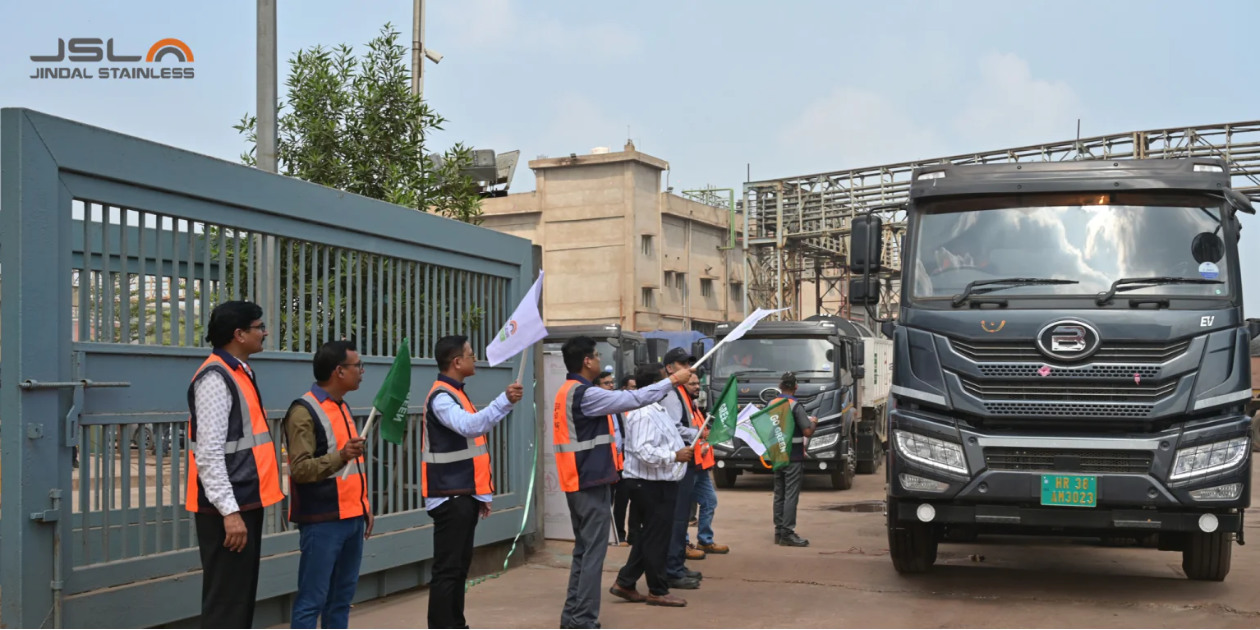
Jindal Stainless has introduced 10 dedicated electric trucks for finished goods transportation for the first time, expanding its efforts to reduce carbon emissions across its logistics operations. The vehicles will operate between the company’s Jajpur plant in Odisha and Kharagpur and Kolkata, forming part of its phased shift towards electric and alternative-fuel transportation.
The deployment builds on the company’s existing fleet of 80 liquefied natural gas (LNG) trucks transporting finished products from its Jajpur and Hisar facilities to western India. It has also begun deploying compressed natural gas (CNG) trucks for moving import cargo from Dhamra to Jajpur and operates 60 CNG buses for employee transportation at its two facilities.
Abhyuday Jindal, Managing Director, Jindal Stainless, said, “We believe that responsible manufacturing must extend beyond our plants to the entire value chain, including the way we transport our products. The deployment of electric trucks marks an important milestone in our efforts to decarbonise logistics and integrate lower-emission transportation solutions into our operations. Our approach is focused on adopting practical, scalable solutions that reduce our environmental footprint while maintaining operational efficiency. We will continue to advance such initiatives as part of our commitment to ESG goals.”
The company expects its electric and alternative-fuel vehicles to transport approximately 8,000–10,000 ton of cargo monthly. Based on an estimated green dispatch volume of 8,000–9,000 ton and around 240,000 km of monthly truck travel, the combined fleet is projected to reduce emissions by approximately 71 ton of CO₂ per month, or about 26 per cent compared with diesel-based transportation. Jindal Stainless plans to extend these lower-emission solutions to additional suitable logistics routes.
