

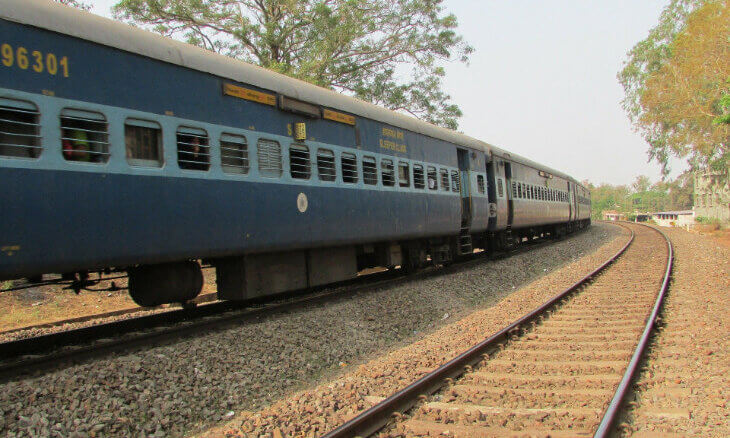
The Cabinet Committee on Economic Affairs (CCEA), chaired by Prime Minister Narendra Modi, has approved the construction of a fourth railway line on the Itarsi–Nagpur section, a strategic move to decongest a critical freight and passenger corridor and deepen regional integration across central India.
Stretching approximately 297 km and traversing key districts such as Narmadapuram, Betul and Pandhurna in Madhya Pradesh, and Nagpur in Maharashtra, the new alignment will span 339 km in total and include 37 stations. The infrastructure package comprises 36 major bridges, 415 minor bridges, two road overbridges, 74 road underbridges, four tunnels and two rail overbridges. Integration with the Mumbai–Howrah High Density Network at Nagpur is expected to ease pressure on existing sections, notably the challenging ghat stretch between Maramjhiri and Dharakhoh.
The project is designed to work in tandem with the ongoing third line initiative, a Rs 2,525.73-crore undertaking, to create layered capacity and operational flexibility. Land acquisition, potentially involving 40 villages in Betul district, may be required in line with precedents set in earlier phases.
Beyond capacity enhancement, the fourth line is expected to deliver broader economic and cultural dividends. It will facilitate smoother movement of passengers and freight, support industrial expansion in the region, and generate significant employment during both construction and operational phases. Improved accessibility is also projected to aid pilgrimage tourism, strengthening connections to major Jyotirlinga sites such as Mahakaleshwar, Omkareshwar, Srisailam and Rameswaram.
The initiative aligns with central infrastructure priorities, including the National Infrastructure Pipeline and the Gati Shakti program, reinforcing the government’s push for integrated, multi-modal, and future-ready transport corridors.