

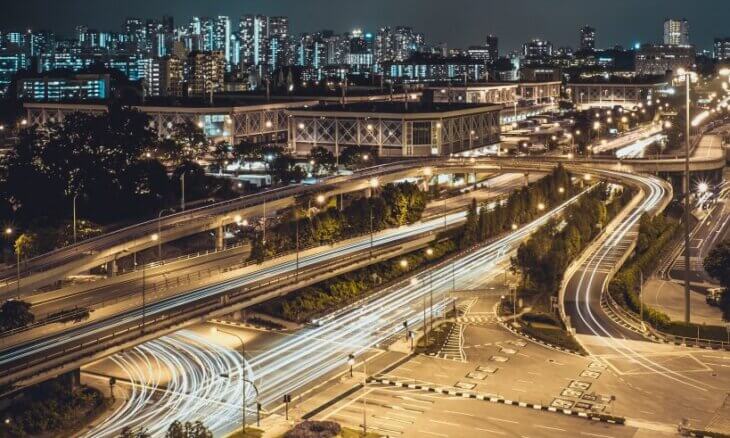
The Union Budget 2026–27 has reaffirmed infrastructure as the central pillar of India’s growth strategy, with public capital expenditure increased to Rs 12.2 lakh crore, compared to Rs 11.2 lakh crore in FY26. This marks a significant rise from Rs 2 lakh crore in FY15, underlining the government’s sustained commitment to long-term asset creation.
To address financing challenges during the construction phase of large projects, the Budget announced the establishment of an Infrastructure Risk Guarantee Fund, which will provide partial credit guarantees to lenders. The move is aimed at mitigating execution and completion risks that often deter private investment in infrastructure development.
The Budget also reiterated continued reliance on InVITs and REITs as asset monetisation tools, alongside institutions such as NIIF and NABFID, to mobilise long-term capital for infrastructure expansion. Special emphasis has been placed on strengthening infrastructure in Tier-II and Tier-III cities, particularly urban centres with populations exceeding five lakh, positioning them as emerging regional growth hubs.
Commenting on the Budget’s infrastructure focus, Manish Agarwal, Managing Director, Satya Group and President, CREDAI Haryana, said, “While some expectations remain unaddressed, the Budget’s strong emphasis on infrastructure-led growth, a reforms-over-rhetoric approach, and sustained focus on Tier-1 and Tier-2 cities provides a solid foundation for long-term sector stability.” He added that “the move to monetise CPSE-owned land is a pragmatic step that can unlock urban supply, support planned densification, and attract institutional capital, enabling more balanced and productive urban development.”
Echoing similar views on the broader economic impact, Sachin Bhandari, CEO & Executive Director, VTP Realty, said, “The Union Budget 2026 lays a strong foundation for long-term urban and economic growth. The strong push on infrastructure, transport corridors, and public capex, along with measures like the Infrastructure Risk Guarantee Fund, will drive urban growth.” He further noted that “for an IT-led market like Pune, improved connectivity and zero tax up to Rs 12 lakh will boost buyer confidence and reflect positively on housing demand.”
Together, the increased capital outlay, financing safeguards and asset monetisation measures are expected to accelerate project execution, crowd in private investment, and sustain demand across construction, EPC contracting, cement, steel and construction equipment segments.