

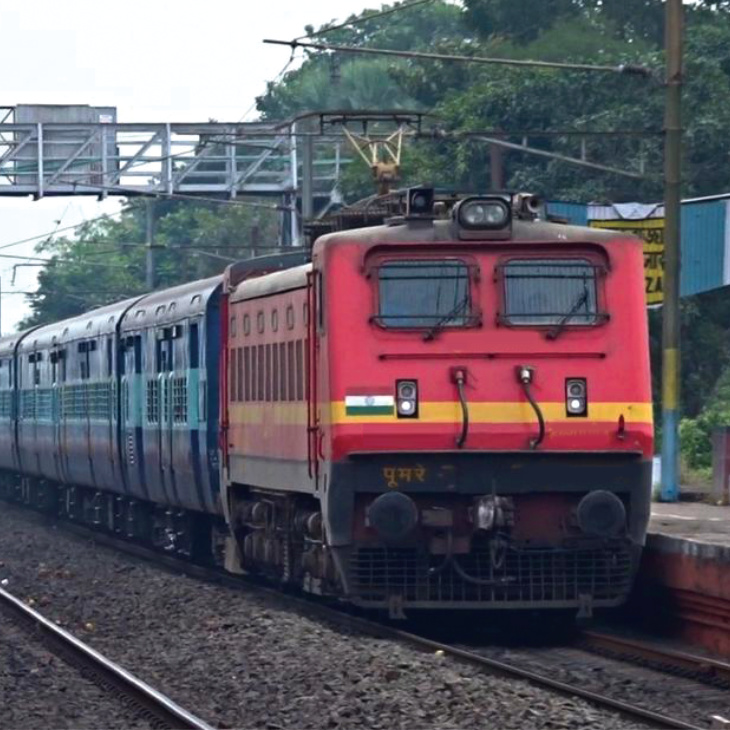
The Union Budget 2026–27 has outlined a transformative approach to passenger transport infrastructure with the announcement of seven high-speed rail corridors, aimed at promoting environmentally sustainable mobility and strengthening regional economic integration.
The proposed corridors—Mumbai–Pune, Pune–Hyderabad, Hyderabad–Bengaluru, Hyderabad–Chennai, Chennai–Bengaluru, Delhi–Varanasi and Varanasi–Siliguri—are envisaged as “growth connectors” linking major economic clusters and improving inter-city travel efficiency.
Complementing the rail push, the Budget introduced City Economic Regions (CERs) with a focus on Tier-II, Tier-III cities and temple towns. Each CER will be supported by an allocation of Rs 5,000 crore over five years, implemented through a challenge-based, reform-linked financing framework. The combined emphasis on rail connectivity and city-centric planning is expected to catalyse investments across roads, bridges, stations, depots and urban transport systems, while easing congestion in major metropolitan centres.
Commenting on the Budget’s transport and mobility thrust, Vinod Aggarwal, MD & CEO, VE Commercial Vehicles, said, “The continued focus on capital expenditure, with Rs 12.2 lakh crore allocated for infrastructure, will play a critical role in sustaining demand for trucks, buses, and logistics assets that underpin economic activity nationwide.” He added that “the Budget reinforces the foundations of the automotive and commercial vehicle industry” while striking “the right balance between near-term industry confidence and long-term capacity building.”
Aggarwal also highlighted the link between transport infrastructure and clean mobility, stating that “the continuation of duty exemptions on capital goods for battery manufacturing, alongside targeted incentives for localized processing, sends a strong signal of intent” and is “instrumental in accelerating EV adoption while building a cost-efficient battery ecosystem.”
From a road construction and execution perspective, Dheeraj Panda, Managing Director, Ammann India, said, “The Union Budget reinforces infrastructure and manufacturing as twin engines of India’s next growth phase, with central capex rising to over ₹12 lakh crore.” He noted that “the announcement of execution of seven new high-speed rail corridors, multimodal logistics, freight-linked infrastructure and urban connectivity especially in tier-2 and tier-3 cities, will drive demand for high-output, reliable and technologically advanced construction equipment.”
Panda further pointed out that “long-term visibility is critical for the construction and equipment industry to plan capacity, technology investments and localisation with confidence,” adding that “MSME-focused measures like improved payment cycles, credit support, and cluster revival will enable smaller contractors to modernise fleets and adopt advanced plants and pavers to cater to the changing infrastructural needs.”
Together, the high-speed rail programme, city-centric transport planning and sustained public capital expenditure are expected to reshape India’s passenger mobility landscape, strengthen road and rail execution capacity, and create long-term demand across construction, equipment, and commercial vehicle segments.