

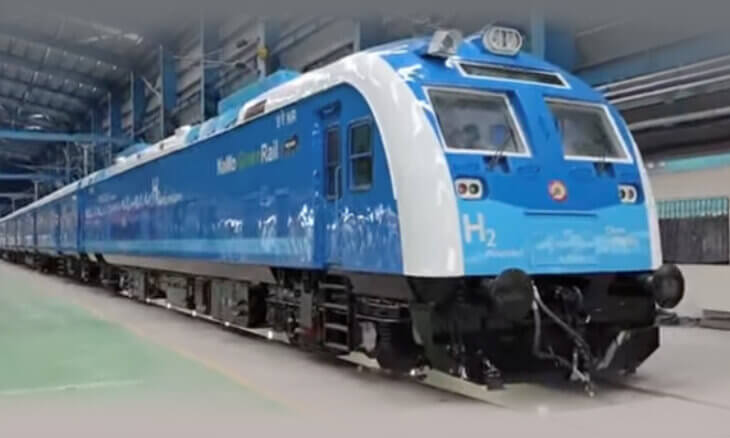
India has taken a major step toward sustainable transportation with the introduction of its first indigenously developed hydrogen-powered passenger train. The new train, named NaMo Green Rail, has been deployed as a pilot project in Haryana, marking the beginning of hydrogen-powered operations within the Indian Railways network.
The train consists of two hydrogen-powered driving cars and eight passenger coaches, offering a carrying capacity of nearly 2,600 passengers. Designed for regional operations, it can achieve a maximum speed of 75 km/h and is expected to demonstrate the viability of hydrogen-based propulsion on rail routes that are not fully electrified.
As part of the pilot initiative, dedicated hydrogen storage and refuelling infrastructure has also been established to support train operations and evaluate the technology under real-world conditions. The project will provide valuable operational data for assessing the future deployment of hydrogen-powered trains across the country.
Hydrogen fuel cell technology generates electricity through the electrochemical reaction of hydrogen and oxygen, producing only water vapour as a direct emission. The technology is increasingly being adopted globally as a cleaner alternative to diesel-powered rail transport, particularly on non-electrified railway corridors.
The launch aligns with India’s broader clean energy strategy and its National Green Hydrogen Mission, which aims to accelerate the adoption of hydrogen as a low-carbon fuel across multiple sectors. Indian Railways is exploring hydrogen-powered trains as part of its long-term decarbonisation roadmap while supporting the country’s target of achieving net-zero carbon emissions by 2070.
The successful implementation of this pilot project is expected to pave the way for wider adoption of hydrogen-powered rail mobility, strengthening India’s commitment to indigenous innovation, energy security, and environmentally sustainable public transportation.