

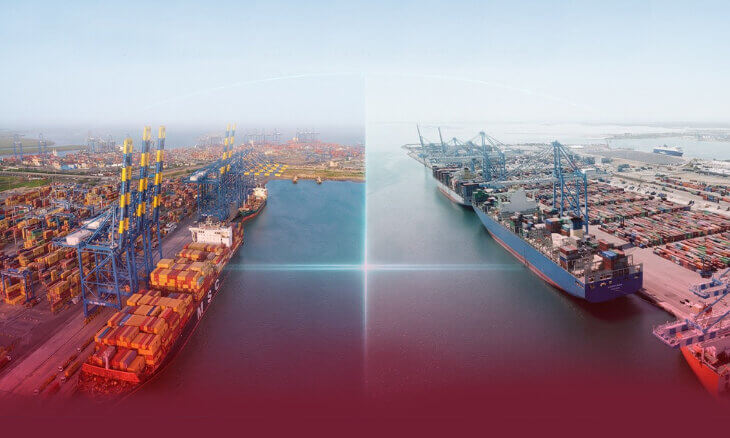
Adani Ports and Special Economic Zone Ltd (APSEZ) has entered into a strategic partnership with the Port of Marseille Fos, France’s largest port and a key Mediterranean gateway, to enhance trade facilitation, accelerate port innovation, and support energy transition initiatives along the India–Middle East–Europe Economic Corridor (IMEC). The collaboration was formalised through the signing of a Memorandum of Understanding (MoU), marking a significant step toward strengthening maritime and logistics integration between India and the European Union.
The agreement outlines plans to establish an IMEC Ports Club, envisioned as a collaborative platform to improve coordination among major ports located along the corridor. This initiative is expected to play a crucial role in reinforcing supply chain linkages and enabling smoother trade flows between India and Europe, particularly in the context of the proposed India–EU Free Trade Agreement, which has been described by Prime Minister Narendra Modi as the ‘mother of all deals.’
The MoU was concluded during the visit of French President Emmanuel Macron, reflecting the growing strategic alignment between India and France and its convergence with the broader IMEC framework and India–EU trade ambitions. Introduced at the G20 Summit in New Delhi in 2023, IMEC is a 6,000-km multimodal corridor designed to connect India and Europe through integrated maritime routes, rail infrastructure, digital connectivity, and sustainable energy networks.
On the Indian side, APSEZ’s ports at Mundra and Hazira already serve as critical logistics nodes, linking South Asia with West Asia and supporting the eastern segment of the corridor. The inclusion of Marseille Fos strengthens the western European end, contributing an additional capacity of approximately 70 Mt and extending the corridor’s reach deeper into the European hinterland. Recognised as one of Europe’s most extensive multimodal port ecosystems, Marseille Fos will provide a structured and efficient gateway to facilitate growing India–EU trade volumes.
The scope of cooperation under the MoU includes joint efforts to promote IMEC as a secure, sustainable, and competitive trade route across Eurasia through international outreach programmes, trade fairs, and business engagements. Both ports will also collaborate on technical exchange and capacity building in areas such as port digitalisation, smart-port technologies, data interoperability, cybersecurity, alternative fuels, shore power infrastructure, and low-carbon bunkering. A key component of the partnership will be the development of a dedicated green maritime corridor between Mundra and Marseille Fos, aligned with global decarbonisation goals.
“India has already taken a leadership role in advancing this corridor, and with the conclusion of the India–EU Free Trade Agreement, trade between the participating countries is expected to grow manifold,” said Ashwani Gupta, Whole-time Director & CEO, APSEZ. “At APSEZ, our ports in Hazira and Mundra on India’s western coast have already established a seamless pathway across the first and middle legs of the corridor. With this MoU with the Port of Marseille Fos in France, we have now successfully connected the final leg to Europe. This partnership will significantly accelerate the exchange of information and materials among all participating nations, further strengthening economic cooperation and supply-chain resilience.”
Hervé Martel, CEO, Port of Marseille Fos, added: “We are pleased to strengthen our partnership with APSEZ at a moment when the IMEC corridor is entering a decisive phase. India and Marseille stand at the two extremities of this future trade backbone, giving both ports a major responsibility in structuring and energizing this new route. Together, we intend to mobilize and federate the ports involved, and to act as strong advocates of a more efficient, resilient and sustainable connection between our regions.”
The partnership represents a critical milestone in operationalising IMEC and reflects the increasing role of port-led collaborations in shaping future global trade corridors, with a strong emphasis on sustainability, digital integration, and resilient supply chains.